
Ragi (Finger Millet) Package of Practices: Complete Cultivation Guide for Farmers

Link
1. Introduction
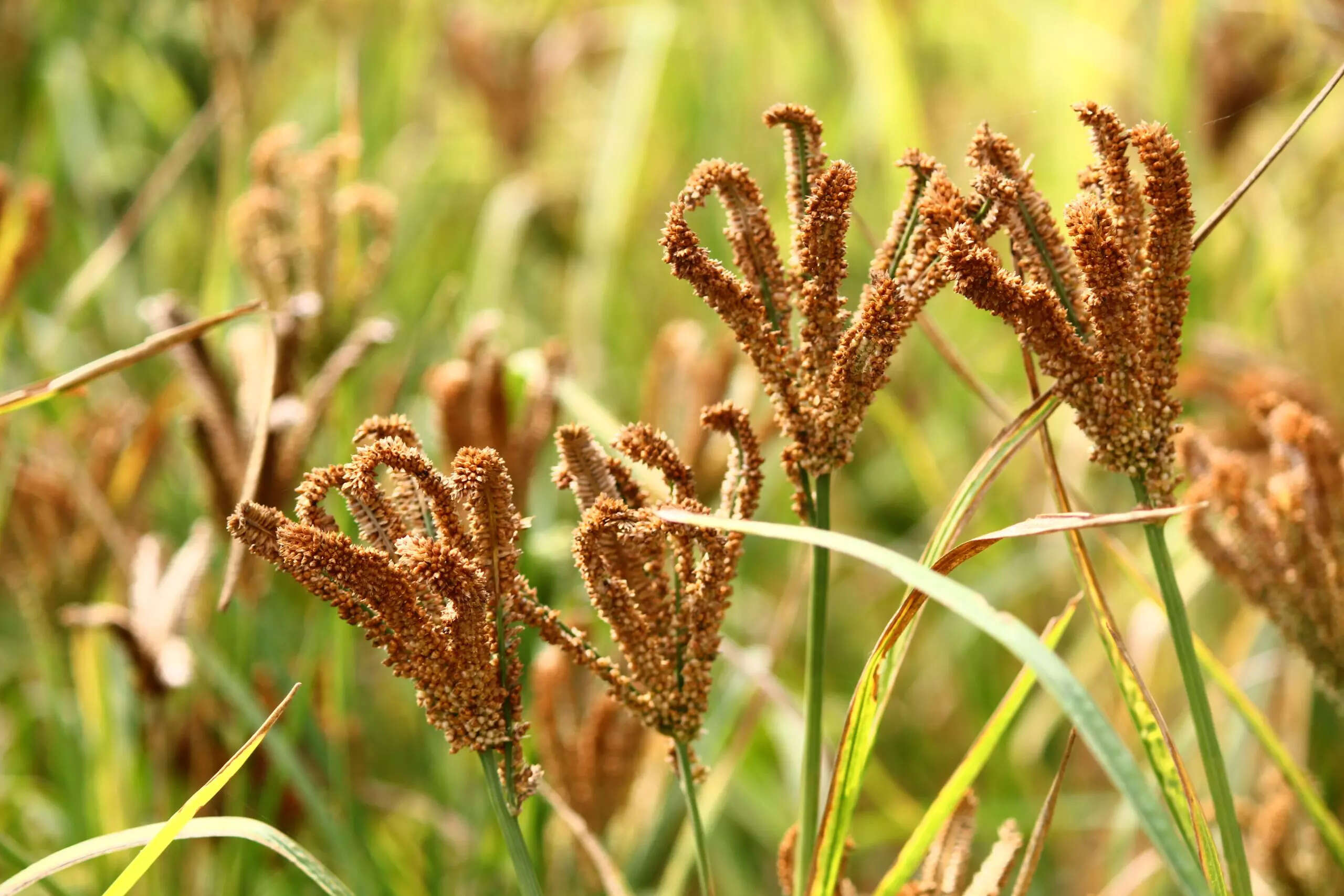
Ragi, also known as Finger Millet, is one of the most important nutri-cereals cultivated in India. Traditionally grown in rainfed and dryland areas, ragi has gained renewed importance due to its high nutritional value, climate resilience, and increasing market demand. Today, ragi cultivation is emerging as a profitable and sustainable farming option for small and marginal farmers.
Importance of Ragi Cultivation in India
India is the world’s largest producer of ragi, with major cultivation in Karnataka, Tamil Nadu, Andhra Pradesh, Telangana, Odisha, Maharashtra, and Uttarakhand. Farmers prefer ragi because:
- It performs well under low rainfall conditions
- Requires minimum inputs
- Suitable for dryland agriculture
- Highly tolerant to drought and poor soils
- Provides stable yields compared to other cereals
Ragi farming plays an important role in ensuring food and nutritional security in semi-arid regions.
Nutritional Value and Health Benefits
Ragi is often called a “super millet” due to its exceptional nutritional composition.
| Nutrient | Benefit |
|---|---|
| Calcium | Strengthens bones and teeth |
| Iron | Prevents anemia |
| Dietary Fiber | Improves digestion |
| Protein | Supports body growth |
| Antioxidants | Boost immunity |
Health-conscious consumers are increasingly choosing ragi products such as flour, biscuits, malt, and ready-to-eat foods.
Increasing Demand and Market Potential
With government promotion under millet missions and rising awareness about healthy diets, demand for ragi is growing rapidly in urban markets. Value-added products offer farmers and agripreneurs better income opportunities.
2. Climate and Soil Requirements
Suitable Climate Conditions
Ragi grows well in tropical and subtropical climates and is highly adaptable to adverse weather conditions.
- Best suited for rainfed regions
- Can tolerate drought better than rice and wheat
- Suitable up to 2,300 m altitude
Temperature Requirements
- Optimum temperature: 20°C – 30°C
- Germination temperature: 18–27°C
Rainfall Requirements
- Ideal rainfall: 500–1000 mm annually
- Well distributed rainfall ensures good crop growth.
Ideal Soil Types and pH
Ragi can grow in various soils but performs best in:
- Red loamy soils
- Sandy loam soils
- Well-drained black soils
Soil pH: 5.5 – 7.5 (slightly acidic to neutral)
Avoid waterlogged conditions.
3. Improved Varieties of Ragi
Selection of suitable varieties increases productivity and disease resistance.
| Variety | Duration (Days) | Suitable Region | Special Features |
|---|---|---|---|
| GPU-28 | 100–110 | South India | High yielding |
| GPU-67 | 105–115 | Karnataka & AP | Blast tolerant |
| MR-1 | 110–120 | Rainfed areas | Stable yield |
| PR-202 | 100–105 | Tamil Nadu | Early maturity |
| VL Mandua 352 | 110 | Hill regions | Cold tolerant |
Farmers should select varieties based on local climate and rainfall.
4. Land Preparation
Proper land preparation ensures good germination and root development.
Field Preparation Steps
- One deep ploughing using mouldboard plough.
- 2–3 harrowings to make fine tilth.
- Remove weeds and crop residues.
- Level the field for uniform irrigation.
Important Practices
- Create drainage channels in heavy soils.
- Incorporate organic manure during final ploughing.
5. Seed Rate and Seed Treatment
Recommended Seed Rate
| Method | Seed Rate |
|---|---|
| Line sowing | 4–5 kg/acre |
| Broadcasting | 6–8 kg/acre |
| Transplanting | 2 kg/acre nursery |
Seed Treatment
Seed treatment improves germination and protects seedlings from diseases.
Biofertilizer Treatment
- Treat seeds with Azospirillum or PSB @ 25 g/kg seed.
Fungicide Treatment
- Carbendazim or Thiram @ 2 g/kg seed (if disease history exists).
Steps:
- Treat with fungicide first.
- Dry in shade.
- Apply biofertilizers before sowing.
6. Sowing Time and Method
Season-wise Sowing
| Season | Sowing Time |
|---|---|
| Kharif | June – July |
| Rabi (irrigated areas) | September – October |
Sowing Methods
Line Sowing (Recommended)
- Better plant population
- Easy weeding and fertilizer application
- Higher yield
Broadcasting
- Suitable for rainfed areas but less efficient.
Spacing
- Row spacing: 22–30 cm
- Plant spacing: 8–10 cm
7. Nutrient Management
Balanced nutrition improves yield and grain quality.
Organic Manure Application
- Farmyard manure (FYM): 2–4 tons/acre
- Apply during land preparation.
Recommended Fertilizer Dose
| Nutrient | Quantity per Acre |
|---|---|
| Nitrogen (N) | 20–25 kg |
| Phosphorus (P₂O₅) | 16–20 kg |
| Potassium (K₂O) | 16–20 kg |
Application Schedule
- Basal: Full P & K + half Nitrogen
- Top dressing: Remaining Nitrogen at 30 days after sowing.
Integrated Nutrient Management (INM)
Combine:
- Organic manure
- Biofertilizers
- Chemical fertilizers
Benefits:
- Improves soil fertility
- Reduces fertilizer cost
- Enhances sustainability
8. Irrigation Management
Ragi is mostly rainfed but responds well to irrigation.
Critical Irrigation Stages
- Tillering stage
- Flowering stage
- Grain filling stage
Water-Saving Practices
- Mulching
- Rainwater harvesting
- Farm ponds
- Proper field leveling
Avoid excess irrigation to prevent lodging.
9. Weed Management
Weeds compete heavily during early growth.
Critical Weed-Free Period
First 30–40 days after sowing.
Mechanical Control
- Hand weeding at 20 and 35 DAS.
- Wheel hoe or cono weeder in line sowing.
Chemical Control
- Pre-emergence: Pendimethalin @ recommended dose after sowing.
Integrated weed management gives best results.
10. Pest and Disease Management
Major Pests
| Pest | Symptoms | Management |
|---|---|---|
| Stem borer | Dead heart | Neem oil spray, pheromone traps |
| Aphids | Leaf curling | Spray neem-based pesticides |
| Cutworms | Seedling damage | Field sanitation |
Major Diseases
| Disease | Symptoms | Management |
|---|---|---|
| Blast | Leaf spots & neck infection | Resistant varieties + fungicide spray |
| Leaf spot | Brown lesions | Seed treatment + spray Mancozeb |
Integrated Pest Management (IPM)
- Use resistant varieties
- Crop rotation
- Neem-based biopesticides
- Balanced fertilization
- Regular field monitoring
11. Intercultural Operations
Proper intercultural practices improve crop stand.
- Thinning: Maintain proper spacing after germination.
- Gap filling: Replace missing plants within 10–12 days.
- Earthing up: Strengthens plants and prevents lodging.
12. Harvesting and Post-Harvest Management
Maturity Indicators
- Ear heads turn brown.
- Grains become hard.
- Leaves start drying.
Harvesting Method
- Cut ear heads or entire plants using sickle.
- Dry for 3–4 days before threshing.
Drying and Storage
- Dry grains to 12% moisture.
- Store in clean, dry containers.
- Use neem leaves for storage pest control.
13. Yield and Economics
Average Yield
| Condition | Yield |
|---|---|
| Rainfed | 8–12 quintals/acre |
| Irrigated | 12–18 quintals/acre |
Cost-Benefit Overview
- Low input cost compared to rice or maize.
- Stable returns even in drought years.
- Additional income from straw as fodder.
Ragi farming offers good profitability with minimal risk.
14. Advantages of Ragi Cultivation
Climate Resilience
- Drought tolerant crop
- Performs under climate variability
Low Input Requirement
- Requires less fertilizer and water
- Suitable for organic farming
Nutritional Security
- Supports millet-based healthy diets
Suitable for Small Farmers
- Low investment
- Reliable yields
15. Conclusion: Future Scope of Ragi Cultivation
Ragi cultivation represents the future of sustainable and climate-smart agriculture in India. With increasing awareness about healthy foods, government millet promotion programs, and growing demand for millet-based products, finger millet farming offers excellent opportunities for farmers and agripreneurs.
Adopting the recommended ragi package of practices — including improved varieties, integrated nutrient management, efficient weed control, and IPM strategies — can significantly enhance productivity and profitability.
As agriculture moves toward sustainability, millet farming in India, especially ragi cultivation, will play a vital role in ensuring food security, farmer income stability, and environmental conservation.