

Okra Cultivation: A Comprehensive Guide to Managing Major Pests and Diseases
Bhendi, popularly known as Okra or Lady’s Finger (Abelmoschus esculentus), is one of the most significant vegetable crops grown in tropical and subtropical regions. Renowned for its high nutritional profile—rich in Vitamin A, C, and K, as well as minerals like calcium and iron it is a staple in many households.
For farmers, okra is a high-value "cash crop" because of its short duration and continuous harvesting cycle. However, the crop’s succulent nature makes it a magnet for a variety of insect pests and pathogens. Without a robust management strategy, yield losses can range from 30% to a staggering 90%, especially during the peak summer and rainy seasons.
Managing these challenges requires more than just spraying chemicals; it demands an understanding of the pest life cycle and the implementation of Integrated Pest and Disease Management (IPDM).
2. Major Insect Pests of Bhendi: Identification and Management
Successful pest management begins with early identification. Here are the primary culprits that affect okra productivity.
A. Shoot and Fruit Borer (Earias vitella and E. insulana)

This is arguably the most destructive pest of okra. It attacks the plant throughout its growth cycle.
Identification: The larvae are brownish-white with dark spots. The adult moths are small with pale green or yellowish forewings.
Nature of Damage: In the early stages, the larvae bore into the growing points (shoots), causing them to droop and wither. Once fruiting begins, they bore into the pods, filling them with excreta.
Symptoms: "Dead hearts" (wilting of the main stem) and holes in the fruits. Affected fruits become deformed and unfit for market.
Favorable Conditions: High humidity and cloudy weather during the rainy season.
Management:
- Cultural: Remove and destroy affected shoots and fruits immediately.
- Biological: Use Pheromone traps (5 per acre) to monitor and trap adult moths. Release Trichogramma chilonis (egg parasites) at 1 lakh/ha.
- Chemical: Spray Emamectin Benzoate 5% SG (0.5g/L) or Spinosad 45% SC (0.3ml/L) at 15-day intervals.

Buy Larvex: https://www.khethari.com/products/larvex-insecticide?_pos=1&_sid=90816f907&_ss=r
For effective control of fruit and shoot borer spray Larvex
B. Jassids (Amrasca biguttula biguttula)
Small, wedge-shaped green insects that hop quickly when disturbed.
Nature of Damage: Both nymphs and adults suck sap from the underside of the leaves.
Symptoms: The leaf margins turn yellow, then brown, and eventually curl downwards—a condition known as "Hopper Burn."
Favorable Conditions: Warm and humid weather.
Management:
- Cultural: Install yellow sticky traps (10-15 per acre).
- Chemical: Seed treatment with Imidacloprid 70 WS (5g/kg seed). Foliar spray of Thiamethoxam 25 WG (0.5g/L).

Buy Now: https://www.khethari.com/products/dr-eliminator-insecticide?_pos=1&_sid=cd15b627f&_ss=r
( For Effective Control of Sucking Pests Use Dr. Eliminator )
C. Whiteflies (Bemisia tabaci)
These tiny, white-winged insects are more dangerous as vectors than as direct feeders.
Nature of Damage: They suck sap, but more importantly, they transmit the Yellow Vein Mosaic Virus (YVMV).
Symptoms: Chlorotic spots on leaves and the presence of "honey dew" which leads to sooty mold (black fungus).
Management:
- Biological: Use Neem Oil (3000 ppm) at 5ml/L to repel adults.
- Chemical: Spray Diafenthiuron 50% WP or Acetamiprid 20% SP.
D. Aphids (Aphis gossypii)
Small, soft-bodied insects usually found in clusters on young shoots.
- Symptoms: Curling of leaves, stunted growth, and sticky leaves due to honeydew.
- Management: Encourage natural predators like Ladybird beetles. Spray Dimethoate 30 EC (2ml/L) if the population exceeds economic thresholds.
E. Red Spider Mites (Tetranychus urticae)
Minute reddish pests found on the leaf undersides, often during hot, dry periods.
- Symptoms: Small white specks on the upper leaf surface. In severe cases, the entire leaf is covered in fine webs and turns reddish-brown.
- Management: Maintain proper irrigation. Spray Spiromesifen 22.9 SC or Dicofol 18.5 EC.
3. Major Diseases of Bhendi: Symptoms and Control
Diseases in okra can spread rapidly, often fueled by poor drainage or infected seeds.
A. Yellow Vein Mosaic Virus (YVMV)
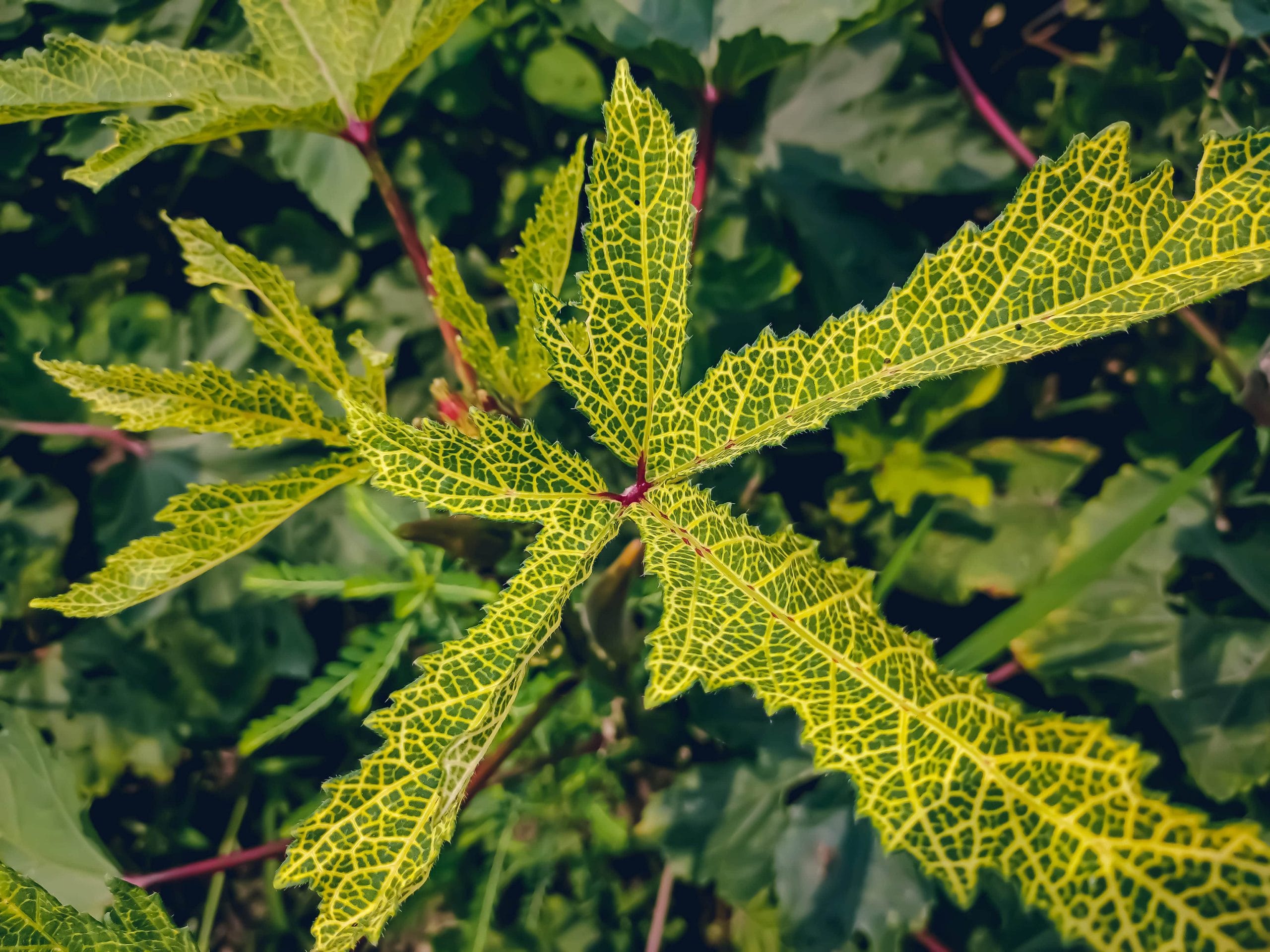
The single biggest threat to okra production.
Causal Organism: Begomovirus (transmitted by Whiteflies).
Symptoms: Initial yellowing of veins and veinlets. Eventually, the entire leaf turns yellow, while the veins may stay green. Fruits become pale, small, and fibrous.
Management:
- Resistance: Plant YVMV-tolerant varieties like Arka Anamika, Varsha Uphar, or Pusa A-4.
- Vector Control: Controlling whiteflies is the only way to control the virus. Remove "volunteer" okra plants from previous seasons.
B. Powdery Mildew (Erysiphe cichoracearum)
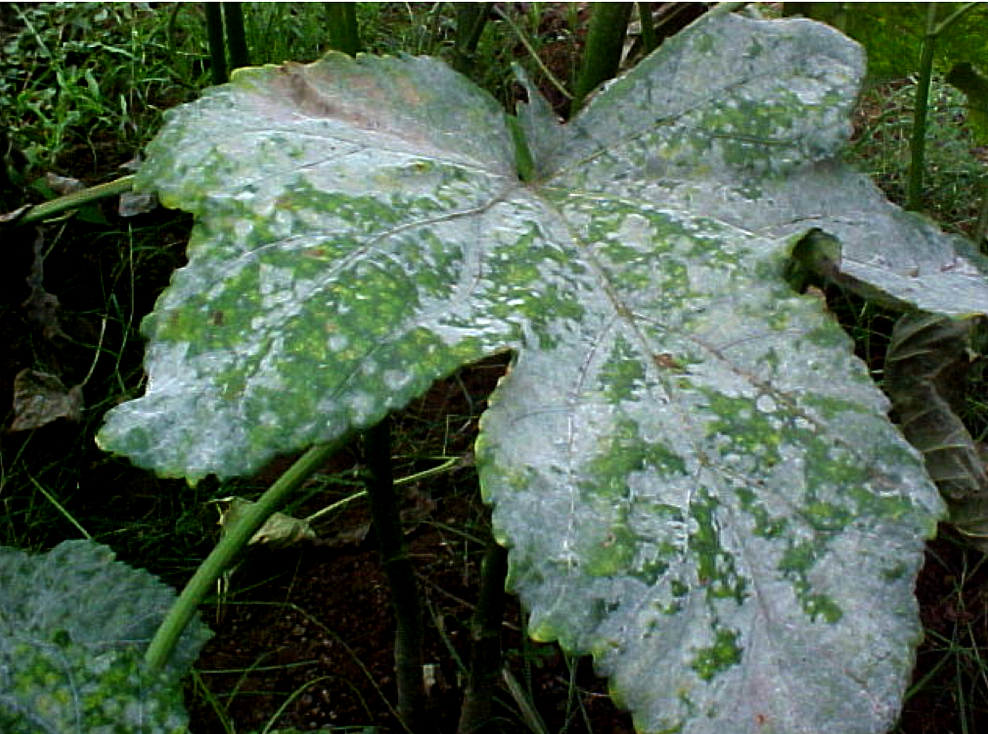
- Symptoms: White, powdery patches appear on the upper surface of leaves and stems. As the disease progresses, leaves turn yellow and drop prematurely.
- Favorable Conditions: Dry weather with high humidity and cool nights.
- Management: Spray Wettable Sulphur (3g/L) or Dinocap (1ml/L).
C. Fusarium Wilt (Fusarium oxysporum f. vasinfectum)
- Symptoms: Yellowing of lower leaves followed by wilting of the entire plant. If you cut the stem, you will see a dark brown discoloration of the internal tissues.
- Management: Crop rotation with non-host crops (like cereals). Soil drenching with Carbendazim (1g/L).
D. Root Rot (Rhizoctonia solani)
- Symptoms: Common in young seedlings. The stem at the soil level turns dark and soft (damping off), causing the plant to collapse.
- Prevention: Avoid waterlogging. Treat seeds with Trichoderma viride (4g/kg seed).
4. Integrated Pest and Disease Management (IPDM)
IPDM is a holistic approach that combines different methods to keep pest populations below the Economic Threshold Level (ETL).
Key Strategies Table
| Strategy | Action |
| Cultural | Deep summer plowing to expose hibernating pests and pathogens. |
| Mechanical | Hand-picking of borer-affected fruits; use of light and pheromone traps. |
| Biological | Conservation of spiders, ladybugs, and the use of Bacillus thuringiensis (Bt). |
| Host Resistance | Selecting hybrids specifically bred for virus resistance. |
| Chemical | Using "green label" pesticides only as a last resort and rotating active ingredients to prevent resistance. |
5. Preventive Measures for Farmers: Best Practices
- Seed Treatment: Always treat seeds with Thiram (3g/kg) or Trichoderma to prevent soil-borne diseases.
- Border Cropping: Plant 2-3 rows of Maize or Sorghum around the okra field. These act as barriers for flying pests like aphids and whiteflies.
- Sticky Traps: Use 10-15 yellow sticky traps per acre for whiteflies and jassids, and blue traps for thrips.
- Field Sanitation: Keep the field free of weeds, as they often serve as alternate hosts for pests.
- Balanced Fertilization: Avoid excessive use of Nitrogen, which makes the plant more succulent and attractive to sucking pests. Use Potash to increase plant immunity.
6. Conclusion
Managing pests and diseases in Bhendi is a marathon, not a sprint. Success lies in vigilance. By identifying symptoms early and adopting an integrated approach—focusing on resistant varieties and biological controls—farmers can significantly reduce their reliance on expensive chemical pesticides. This not only improves the yield and quality of the okra but also ensures a safer product for consumers and a healthier environment.