
Major Pests and Diseases of Green Gram and Their Integrated Management

Link

1. Introduction
Green gram (Vigna radiata), also known as mung bean, is one of the most important pulse crops of India. It is widely cultivated during Kharif, Rabi, and summer seasons across diverse agro-climatic zones, including rainfed and irrigated conditions.
Importance of Green Gram in Indian Agriculture
- Plays a vital role in nutritional security due to high protein content
- Improves soil fertility through biological nitrogen fixation
- Short duration crop (60–70 days), suitable for crop rotation and intercropping
- Low water requirement compared to cereals
- Important source of income for small and marginal farmers
Nutritional and Economic Significance
- Protein: 22–24%
- Rich in lysine, vitamins, minerals, and dietary fiber
- High market demand for dal, sprouts, and processed foods
- Export potential due to increasing global demand
Yield Losses Due to Pests and Diseases
Despite its importance, green gram productivity in India (≈ 500–600 kg/ha) is much lower than its potential. Major reasons include:
- Severe infestation of insect pests
- Frequent outbreaks of viral and fungal diseases
- Lack of timely diagnosis and improper pesticide use
Estimated yield losses:
- Insect pests: 30–40%
- Diseases (especially YMV): up to 80% under severe conditions
Hence, adopting an Integrated Pest and Disease Management (IPM & IDM) approach is essential for sustainable and profitable green gram cultivation.
2. Major Insect Pests of Green Gram
2.1 Aphids
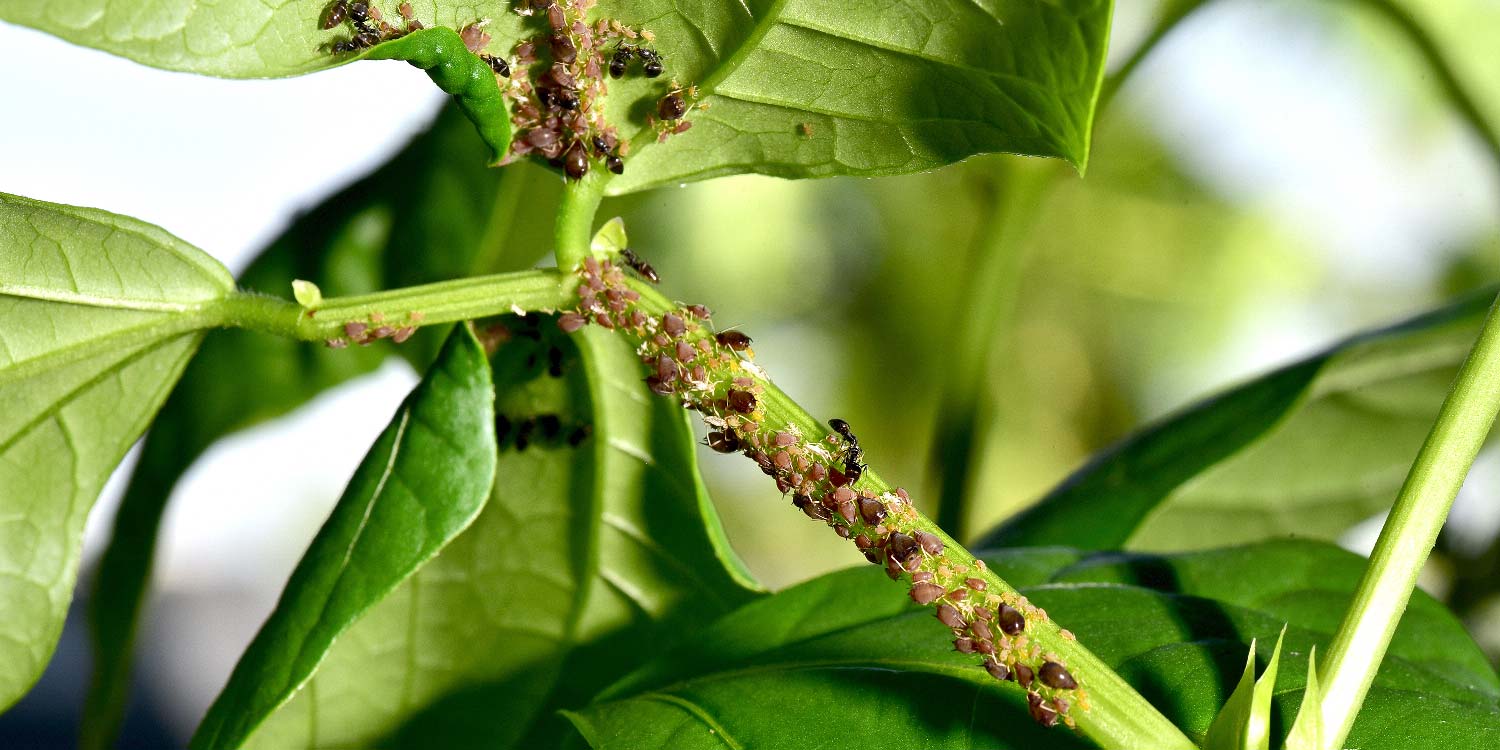
Common name: Aphids
Scientific name: Aphis craccivora
Identification & Damage Symptoms
- Small, soft-bodied, green to black insects on tender shoots and leaves
- Suck sap → leaves curl, turn yellow, and plant growth is stunted
- Secrete honeydew → development of sooty mould
- Act as vectors of viral diseases
Favorable Conditions
- Cool and dry weather
- Dense crop canopy
- Excess nitrogen application
Economic Threshold Level (ETL)
-
10–15 aphids per 10 cm terminal shoot
Integrated Management
Cultural Practices
- Avoid excess nitrogen
- Maintain proper plant spacing
- Remove weed hosts (especially legumes)
Mechanical Methods
- Early stage: strong water spray to dislodge aphids
- Removal of heavily infested shoots
Biological Control
- Ladybird beetles (Coccinella spp.)
- Lacewings (Chrysoperla carnea)
- Neem-based formulations
Chemical Control (Need-based)
- Imidacloprid 17.8 SL @ 0.3 ml/litre
- Thiamethoxam 25 WG @ 0.25 g/litre
- Spray interval: 10–14 days

2.2 Whitefly (Vector of Yellow Mosaic Virus)

Scientific name: Bemisia tabaci
Identification & Damage Symptoms
- Tiny white insects on the underside of leaves
- Yellowing, leaf curling, reduced vigor
- Transmission of Yellow Mosaic Virus (YMV)
Favorable Conditions
- Warm and dry climate
- Continuous pulse cultivation
- Presence of alternate hosts
ETL
- 5–10 adults per leaf
Integrated Management
Cultural Practices
- Timely sowing (avoid peak whitefly period)
- Removal of infected plants
- Use of resistant varieties
Mechanical Methods
- Yellow sticky traps (10–12/acre)
Biological Control
- Encarsia and Eretmocerus parasitoids
- Neem oil 0.3%
Chemical Control
- Imidacloprid 17.8 SL @ 0.3 ml/litre
- Acetamiprid 20 SP @ 0.2 g/litre
⚠️ Avoid repeated use of same insecticide group
2.3 Thrips
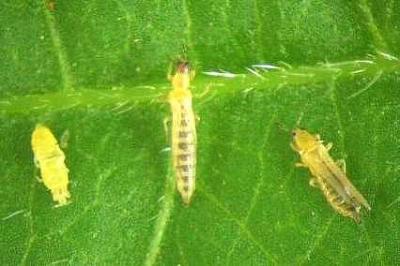
Scientific name: Thrips palmi
Damage Symptoms
- Silvery streaks on leaves
- Leaf curling and drying
- Flower drop in severe cases
Favorable Conditions
- Hot and dry weather
- Moisture stress
ETL
- 5–8 thrips per leaf
Integrated Management
- Timely irrigation
- Blue sticky traps
- Neem oil 3 ml/litre
- Spinosad 45 SC @ 0.3 ml/litre
2.4 Jassids (Leafhoppers)
Scientific name: Empoasca kerri
Symptoms
- Yellowing at leaf margins (“hopper burn”)
- Downward curling of leaves
- Reduced photosynthesis
Management
- Resistant varieties
- Balanced fertilization
- Thiamethoxam 25 WG @ 0.25 g/litre
2.5 Stem Fly
Scientific name: Ophiomyia phaseoli
Damage Symptoms
- Maggots bore into stem
- Wilting and drying of young plants
- Swollen stems with tunneling marks
Favorable Conditions
- Early crop stage (10–30 DAS)
Integrated Management
- Early sowing
- Seed treatment with Imidacloprid 600 FS @ 5 ml/kg seed
- Soil application of neem cake
2.6 Leaf Miner
Scientific name: Liriomyza trifolii
Symptoms
- Zig-zag mines on leaves
- Reduced photosynthetic area
Management
- Removal of mined leaves
- Neem oil spray
- Abamectin 1.9 EC @ 0.5 ml/litre
2.7 Pod Borer
Scientific name: Helicoverpa armigera
Damage Symptoms
- Larvae feed on flowers and pods
- Circular holes on pods
- Direct yield loss
ETL: 1 larva per plant
Integrated Management
Cultural
- Deep summer ploughing
- Intercropping with sorghum or marigold
Mechanical
- Handpicking larvae
- Pheromone traps (5/acre)
Biological
- Helicoverpa NPV @ 250 LE/ha
- Trichogramma egg parasitoids
Chemical
- Emamectin benzoate 5 SG @ 0.4 g/litre
- Chlorantraniliprole 18.5 SC @ 0.3 ml/litre
3. Major Diseases of Green Gram
3.1 Yellow Mosaic Virus (YMV)

Causal organism: Virus (transmitted by whitefly)
Symptoms
- Yellow and green mosaic patches
- Reduced flowering and pod formation
- Severe stunting
Mode of Spread
- Whitefly (Bemisia tabaci)
Yield Impact
- 30–80%, severe outbreaks may cause complete crop failure
Integrated Disease Management
Resistant Varieties
-
IPM 02-3, SML 668, PDM 139
Cultural
- Early sowing
- Rogue out infected plants
- Weed control
Chemical (Vector Control)
- Imidacloprid 17.8 SL @ 0.3 ml/litre
3.2 Cercospora Leaf Spot

Causal organism: Cercospora canescens
Symptoms
- Circular brown spots with yellow halo
- Defoliation under severe infection
Favorable Conditions
- High humidity and moderate temperature
Management
- Seed treatment with Carbendazim @ 2 g/kg seed
- Mancozeb 75 WP @ 2.5 g/litre
3.3 Powdery Mildew

Causal organism: Erysiphe polygoni
Symptoms
- White powdery growth on leaves
- Premature leaf drop
Management
- Resistant varieties
- Wettable sulphur @ 2 g/litre
- Hexaconazole 5 EC @ 1 ml/litre
3.4 Root Rot & Collar Rot
Causal organisms: Rhizoctonia solani, Macrophomina phaseolina
Symptoms
- Seedling death
- Black lesions at collar region
Management
- Seed treatment with Trichoderma viride @ 4 g/kg seed
- Avoid waterlogging
- Crop rotation
3.5 Anthracnose

Causal organism: Colletotrichum lindemuthianum
Symptoms
- Dark sunken lesions on stem and pods
- Poor seed quality
Management
- Disease-free seed
- Carbendazim + Mancozeb @ 2 g/litre
3.6 Leaf Crinkle Disease

Cause: Virus
Symptoms
- Crinkled, distorted leaves
- Bushy growth and sterility
Management
- Rogue out infected plants
- Control vectors (aphids)
- Use healthy seed
4. Preventive Measures & Best Agronomic Practices
- Use certified disease-free seed
- Seed treatment is mandatory
- Crop rotation with cereals
- Timely sowing (avoid late Kharif sowing)
- Recommended spacing (30 × 10 cm)
- Balanced fertilizer application (avoid excess nitrogen)
5. Organic & Eco-Friendly Management Options
- Neem oil (0.3%)
- Neem seed kernel extract (NSKE 5%)
- Trichoderma, Pseudomonas fluorescens
- Cow urine-based botanical sprays
- Conservation of natural enemies
6. Stage-wise Spray Schedule (Indicative)
| Crop Stage | Problem | Recommendation |
|---|---|---|
| Seed stage | Soil-borne diseases | Trichoderma seed treatment |
| 15–20 DAS | Aphids, whitefly | Neem oil / Imidacloprid |
| 30–35 DAS | Thrips, leaf miner | Spinosad / Abamectin |
| Flowering | Pod borer | Emamectin benzoate |
| Disease onset | Leaf spots | Mancozeb |
7. Conclusion
Green gram is a highly rewarding pulse crop, but its success largely depends on early diagnosis of pests and diseases and adoption of an integrated management approach. Over-dependence on chemicals not only increases costs but also leads to resistance and ecological imbalance.
Key Advice to Farmers
- Monitor fields regularly
- Follow IPM & IDM principles
- Use chemicals only when ETL is crossed
- Prefer eco-friendly and biological options
- Seek guidance from agriculture officers when needed
By adopting scientifically proven, integrated practices, farmers can achieve higher yields, better quality produce, and sustainable green gram cultivation.