
Major Pests and Diseases in Ginger and Their Management

Link
Introduction
Ginger (scientific name: Zingiber officinale) is one of the most important spice crops cultivated in tropical and subtropical regions of the world. It is widely used as a spice, medicinal herb, and value-added ingredient in food processing industries. Ginger is valued for its unique aroma, pungent flavor, and numerous health benefits, making it a high-demand commodity in both domestic and international markets.
However, ginger cultivation faces significant challenges due to various pests and diseases that can drastically reduce yield and quality. If not managed properly, these problems can lead to heavy economic losses for farmers. Therefore, understanding the major pests and diseases affecting ginger and adopting proper management strategies is essential for sustainable and profitable cultivation.
This article provides a comprehensive guide on major pests and diseases in ginger and their integrated management practices to help farmers protect their crops and improve productivity.
Importance of Ginger Cultivation
Ginger is considered one of the most important spice crops in agriculture due to its wide applications in food, medicine, and industry.
Key importance of ginger cultivation
• Used as a major spice in cooking worldwide
• Important ingredient in Ayurvedic and traditional medicine
• Used in beverages, confectionery, bakery, and pickles
• High export demand in international markets
• Suitable for cultivation in small and marginal farms
Ginger cultivation also provides employment opportunities in rural areas through production, processing, packaging, and marketing.
Economic Value of Ginger Crop
Ginger is a high-value cash crop that provides good returns compared to many other crops.
Economic benefits
| Parameter | Value |
|---|---|
| Crop duration | 7–9 months |
| Average yield | 15–25 tons per hectare |
| Export demand | Very high |
| Market price | High compared to many spice crops |
Major ginger-producing states in India include:
• Kerala
• Karnataka
• Meghalaya
• Assam
• Arunachal Pradesh
• Odisha
• Telangana and Andhra Pradesh
Due to its profitability, farmers are increasingly adopting ginger cultivation. However, pest and disease problems remain a major constraint.
Why Pest and Disease Management is Critical
Ginger is highly susceptible to several pests and diseases, especially under warm and humid conditions.
Major impacts of pests and diseases
• Reduction in crop yield
• Poor rhizome quality
• Lower market value
• Crop failure in severe infestations
• Increased production costs
In severe cases, diseases like soft rot and bacterial wilt can destroy entire fields of ginger crop. Hence, adopting Integrated Pest Management (IPM) and Integrated Disease Management (IDM) practices is essential.
Major Pests of Ginger
Several insect pests attack ginger crop at different growth stages. The following are the most important pests affecting ginger cultivation.
1. Shoot Borer

Scientific Name: Conogethes punctiferalis
Identification
• Adult moth is yellowish-brown with small black spots
• Larvae are pale green with a brown head
• Caterpillars bore into tender shoots
Symptoms
• Small holes on pseudostem
• Yellowing and drying of central shoot (dead heart)
• Presence of bore holes and frass
• Reduced plant growth
Nature of Damage
The larvae bore into the pseudostem and feed inside the stem tissue, causing the central shoot to dry. Severe infestation can reduce yield significantly.
Favorable Conditions
• Warm and humid climate
• Dense crop canopy
• Poor field sanitation
Integrated Pest Management
Cultural Control
• Remove and destroy infested shoots
• Maintain proper plant spacing
• Use healthy planting material
Biological Control
• Release parasitoids such as Trichogramma species
• Use neem-based bio-pesticides
Chemical Control
• Spray Neem oil 2%
• Spray Spinosad 45 SC @ 0.3 ml per liter
• Spray Chlorantraniliprole 18.5 SC @ 0.3 ml per liter
2. Rhizome Fly

Scientific Name: Mimegralla coeruleifrons
Identification
• Adult fly resembles a small housefly
• Maggots feed inside the rhizomes
Symptoms
• Yellowing of leaves
• Rhizomes become soft and damaged
• Maggots found inside rhizomes
Nature of Damage
The larvae feed on rhizomes, causing internal damage which results in poor plant growth and rotting of rhizomes.
Favorable Conditions
• Waterlogged soils
• Poor drainage
• High humidity
Integrated Pest Management
Cultural Control
• Ensure proper drainage
• Avoid water stagnation
• Remove infected plants
Biological Control
• Application of entomopathogenic fungi such as Beauveria bassiana
Chemical Control
• Soil drenching with Chlorpyrifos 20 EC @ 2 ml/litre
• Application of Fipronil 0.3G
3. Scale Insects
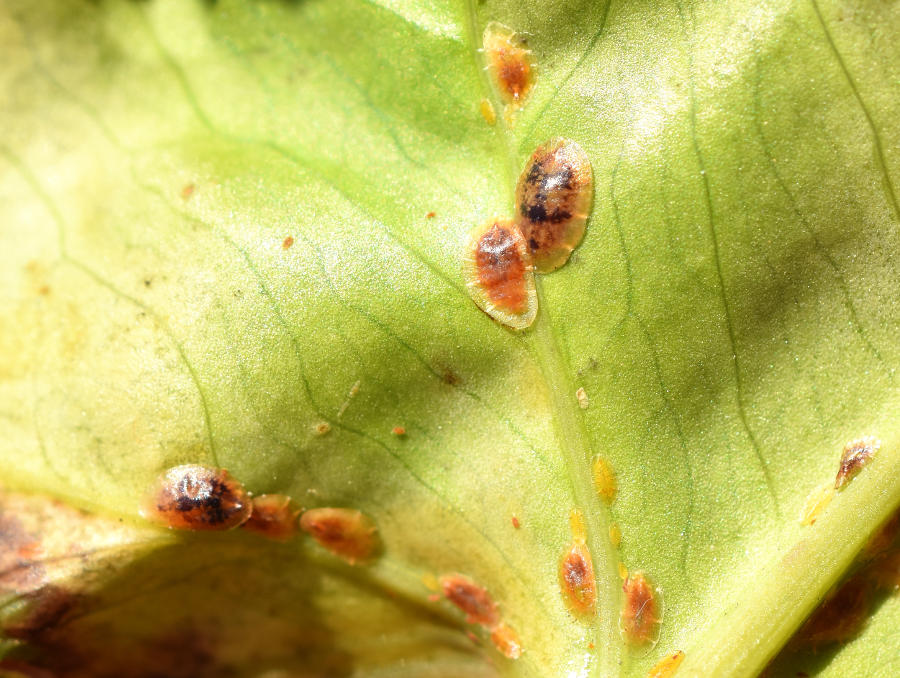
Scientific Name: Aspidiella hartii
Identification
• Small, circular, brown scale-like insects
• Found on rhizomes and roots
Symptoms
• Yellowing and stunted plant growth
• Rhizomes covered with scale insects
• Reduced rhizome quality
Nature of Damage
Scale insects suck sap from rhizomes and roots, weakening the plant and reducing yield.
Favorable Conditions
• Storage conditions with high humidity
• Poor ventilation
Integrated Pest Management
Cultural Control
• Use pest-free seed rhizomes
• Store rhizomes in well-ventilated areas
Biological Control
• Predatory insects such as ladybird beetles
Chemical Control
• Spray Dimethoate 30 EC @ 2 ml/litre
• Spray Malathion 50 EC @ 2 ml/litre
4. Nematodes
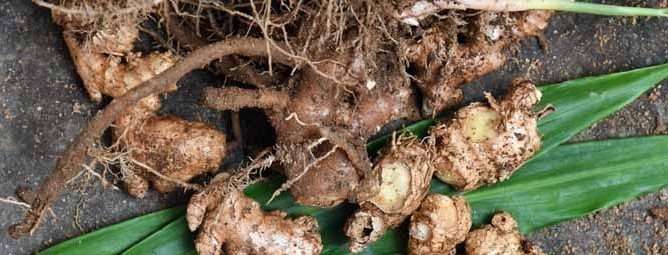
Scientific Name: Meloidogyne incognita
Identification
• Microscopic roundworms present in soil
Symptoms
• Root galls
• Poor plant growth
• Yellowing of leaves
• Reduced rhizome formation
Nature of Damage
Nematodes attack roots and rhizomes, reducing nutrient uptake and making plants susceptible to other diseases.
Favorable Conditions
• Sandy soils
• Continuous ginger cultivation
Integrated Pest Management
Cultural Control
• Crop rotation with non-host crops
• Use nematode-free planting material
Biological Control
• Application of Paecilomyces lilacinus
• Application of Trichoderma viride
Chemical Control
• Application of Carbofuran 3G @ 30 kg/ha
Major Diseases of Ginger
Ginger is highly vulnerable to fungal and bacterial diseases. The following diseases cause major yield losses.
1. Soft Rot / Rhizome Rot
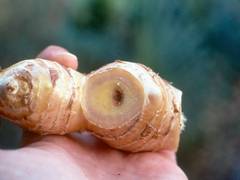
Causal Organism: Pythium aphanidermatum
Symptoms
• Yellowing of leaves
• Soft and water-soaked rhizomes
• Foul smell from infected rhizomes
• Plant wilting
Disease Cycle
The fungus survives in soil and infected rhizomes and spreads through water and contaminated tools.
Favorable Conditions
• Heavy rainfall
• Waterlogged soils
• Poor drainage
Disease Management
Preventive Measures
• Use disease-free seed rhizomes
• Ensure proper drainage
Chemical Control
• Treat seed rhizomes with Metalaxyl + Mancozeb
• Soil drenching with Copper oxychloride
2. Bacterial Wilt
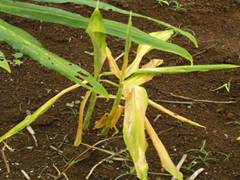
Causal Organism: Ralstonia solanacearum
Symptoms
• Sudden wilting of plants
• Yellowing of leaves
• Brown discoloration in vascular tissues
Disease Cycle
The bacteria survive in soil and enter plants through roots or wounds.
Favorable Conditions
• Warm temperatures
• High soil moisture
Disease Management
• Use resistant varieties
• Crop rotation with non-host crops
• Removal of infected plants
• Soil drenching with Bleaching powder
3. Leaf Spot
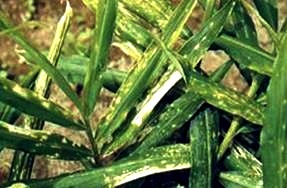
Causal Organism: Phyllosticta zingiberi
Symptoms
• Small brown spots on leaves
• Spots enlarge and merge
• Premature leaf drying
Favorable Conditions
• High humidity
• Frequent rainfall
Disease Management
• Remove infected leaves
• Spray Mancozeb 0.25%
4. Dry Rot
Causal Organism: Fusarium oxysporum
Symptoms
• Yellowing of leaves
• Dry rot of rhizomes
• Reduced plant vigor
Disease Management
• Treat seed rhizomes with Trichoderma viride
• Crop rotation
Integrated Pest and Disease Management in Ginger
Effective ginger crop protection requires an integrated approach combining cultural, biological, and chemical methods.
Key strategies
• Field sanitation
• Use of healthy seed rhizomes
• Crop rotation
• Biological control agents
• Proper irrigation management
• Good drainage system
Best Preventive Practices for Healthy Ginger Crop
Soil Treatment Methods
• Solarization of soil
• Application of neem cake
• Soil treatment with Trichoderma
Organic Management Techniques
• Use of neem-based pesticides
• Application of biofertilizers
• Mulching
Role of Biofertilizers and Biopesticides
Biofertilizers and biopesticides help improve soil health and suppress pests and diseases naturally.
Important biological agents include:
• Trichoderma viride
• Pseudomonas fluorescens
• Beauveria bassiana
These organisms suppress pathogens and improve plant resistance.
Practical Tips for Farmers
• Always select healthy seed rhizomes
• Maintain proper field drainage
• Avoid continuous ginger cultivation
• Monitor fields regularly for pest and disease symptoms
• Use integrated pest management practices
Early detection and timely control measures can significantly reduce crop losses.
Conclusion
Ginger cultivation offers excellent economic opportunities for farmers, but pests and diseases can severely affect production if not managed properly. Major pests such as shoot borer, rhizome fly, scale insects, and nematodes, along with diseases like soft rot, bacterial wilt, leaf spot, and dry rot, pose serious threats to ginger crops.
Adopting integrated pest and disease management practices, including field sanitation, crop rotation, biological control, and judicious use of chemicals, is essential for sustainable ginger cultivation.
Early detection of problems and timely implementation of management practices can help farmers protect their crops, improve productivity, and achieve higher profits.
Sustainable ginger crop protection strategies will not only enhance yield but also maintain soil health and ensure long-term agricultural sustainability.