

Major Diseases in Watermelon and Their Management
 Share
Share

Introduction
Watermelon (Citrullus lanatus) is one of the most important fruit crops cultivated in tropical and subtropical regions. It is widely grown for its refreshing taste, high water content, and nutritional value. Watermelon is an excellent source of vitamins A, B6, and C, along with antioxidants like lycopene.
In India, watermelon cultivation has become an important income-generating crop for farmers, especially during the summer season. However, several fungal, bacterial, and soil-borne diseases significantly affect watermelon production. These diseases reduce plant vigor, decrease fruit yield, and lower fruit quality, resulting in economic losses to farmers.
Effective disease management requires early identification, proper cultural practices, and timely application of control measures. Integrated Disease Management (IDM) combining cultural, biological, and chemical approaches is the best strategy to protect the crop and ensure higher productivity.
Major Diseases of Watermelon
1. Fusarium Wilt
Causal Organism
Fusarium oxysporum f. sp. niveum (soil-borne fungus)
Symptoms and Field Identification
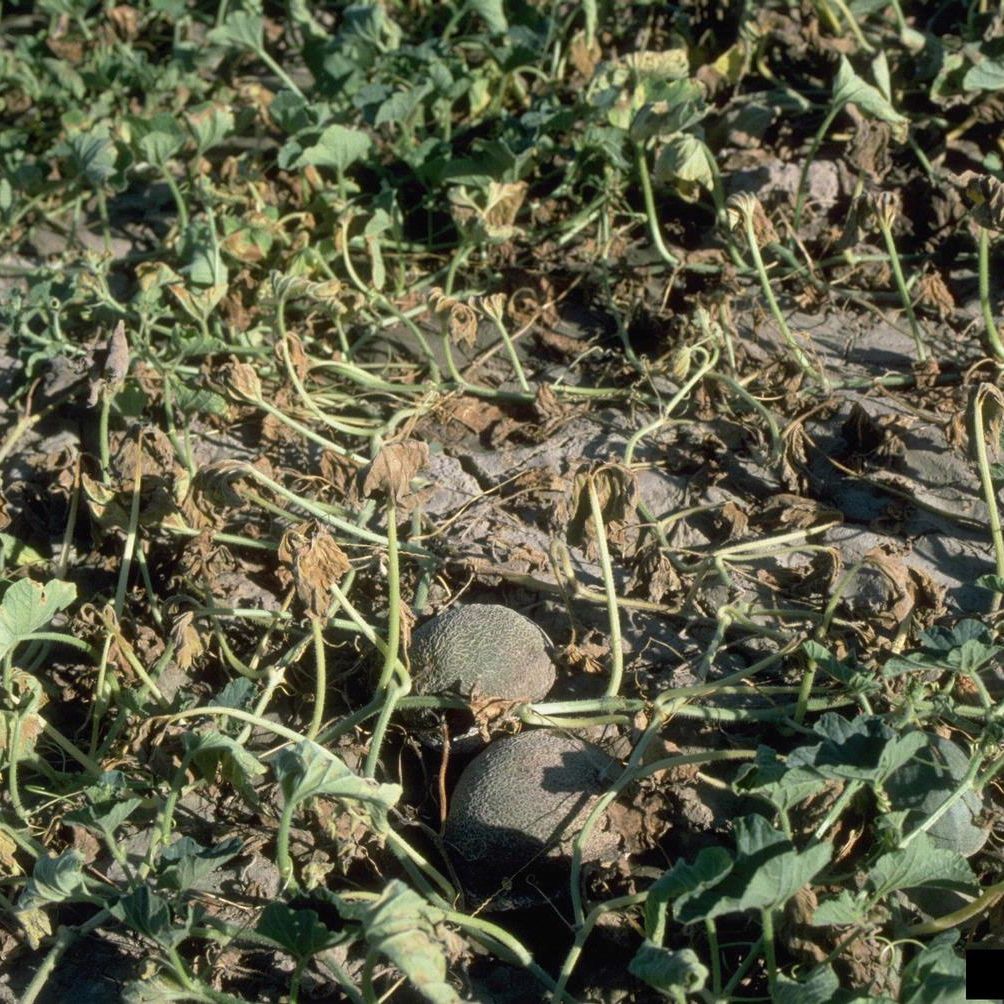
- Yellowing of older leaves initially.
- Wilting of vines during the day and partial recovery at night.
- Progressive wilting leading to plant death.
- Browning of vascular tissues when the stem is cut.
- Stunted growth and poor fruit development.
Favorable Conditions
- Warm soil temperatures (25–30°C).
- Light sandy soils.
- Continuous watermelon cultivation in the same field.
Disease Spread and Lifecycle
The fungus survives in soil for many years through chlamydospores. It infects plants through roots and spreads via infected soil, water, and farm tools.
Integrated Disease Management
- Grow resistant varieties.
- Follow crop rotation with non-host crops.
- Improve soil drainage.
- Use biological control agents.
Control through Katyayani
KTM Thiophanate Methyl 70% WP
Katyayani Tyson | Trichoderma Viride 1% WP | Bio Fungicide Powder
2. Powdery Mildew
Causal Organism
Podosphaera xanthii or Erysiphe cichoracearum
Symptoms
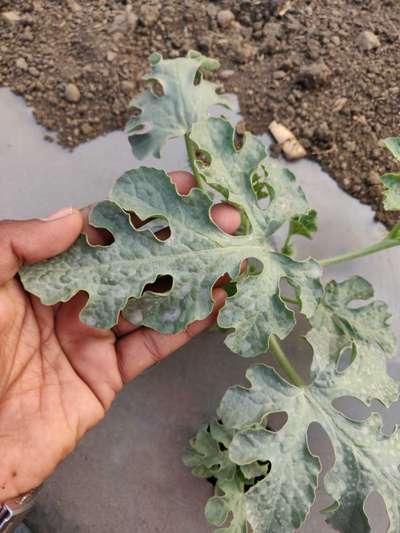
- White powdery fungal growth on leaves.
- Yellow patches on upper leaf surfaces.
- Leaves gradually dry and fall.
- Reduced photosynthesis leading to poor fruit development.
Favorable Conditions
- Moderate temperature (20–27°C).
- High humidity but dry leaf surfaces.
Disease Spread
The fungus spreads through airborne spores that infect nearby plants rapidly.
Integrated Management
- Maintain proper plant spacing.
- Remove infected leaves.
- Apply recommended fungicides when symptoms appear.
Control Through
Katyayani Dr. Zole | Azoxystrobin 11% + Tebuconazole 18.3% SC | Chemical Fungicide
Katyayani All In One | Organic Fungicide
3. Downy Mildew
Causal Organism
Pseudoperonospora cubensis
Symptoms
- Yellow angular spots on upper leaf surface.
- Grey or purple fungal growth on the underside of leaves.
- Leaves turn brown and die quickly.
Favorable Conditions
- Cool and humid weather.
- Frequent rainfall and high relative humidity.
Disease Spread
The pathogen spreads through windborne spores and infected plant debris.
Management
- Avoid overhead irrigation.
- Improve field ventilation.
- Use resistant varieties where available.
Control Through
Katyayani Dr Blight | Metalaxyl-M 3.3% + Chlorothalonil 33.1% SC | Chemical Fungicide
Katyayani Azodharma – Advanced Systemic Fungicide for Comprehensive Crop Protection
4. Anthracnose
Causal Organism
Colletotrichum orbiculare
Symptoms
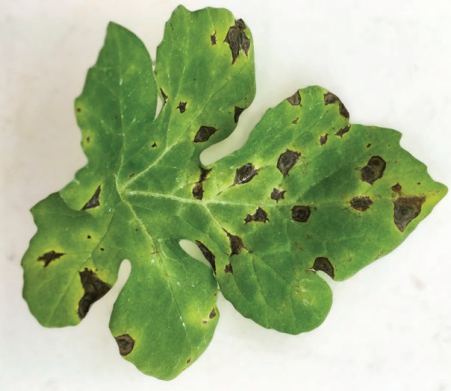
- Circular brown to black lesions on leaves.
- Sunken spots on fruits.
- Cracking of fruit surfaces in severe infections.
Favorable Conditions
- Warm temperatures (22–28°C).
- High humidity and rainfall.
Disease Spread
Spores spread through rain splash, irrigation water, and infected seeds.
Integrated Management
- Use disease-free seeds.
- Practice crop rotation.
- Remove infected plant debris.
Control through
Katyayani Azodharma – Advanced Systemic Fungicide for Comprehensive Crop Protection
Katyayani Plantivo - Tebuconazole 50% + Trifloxystrobin 25% WG
5. Alternaria Leaf Blight

Causal Organism
Alternaria cucumerina
Symptoms
- Small brown spots on older leaves.
- Spots enlarge with concentric rings.
- Leaves turn yellow and dry prematurely.
Favorable Conditions
- Warm and humid weather.
- Dense crop canopy.
Disease Spread
The fungus survives in crop residues and spreads by wind and rain splash.
Integrated Management
- Field sanitation.
- Proper plant spacing.
- Balanced fertilizer application.
Control through:
Katyayani Boost | Propiconazole 25% EC | Chemical Fungicide
Katyayani Propi | Propineb 70% WP | Fungicide
6. Bacterial Fruit Blotch
Causal Organism
Acidovorax citrulli
Symptoms
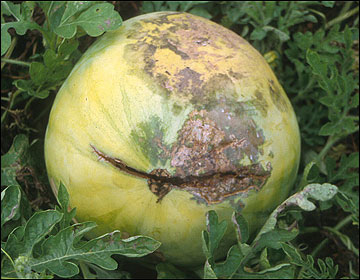
- Dark green water-soaked lesions on fruits.
- Lesions enlarge and become necrotic.
- Internal fruit rot leading to unmarketable fruits.
Favorable Conditions
- Warm and humid climate.
- Contaminated seeds.
Disease Spread
Primarily seed-borne and spreads through irrigation water, rain splash, and field operations.
Integrated Management
- Use certified disease-free seeds.
- Avoid overhead irrigation.
- Practice strict field sanitation.
Control through
Katyayani COC 50 | Copper Oxychloride 50% WP | Chemical fungicide
Katyayani Mycinmax | Kasugamycin 3% SL | Fungicide
7. Damping-Off
Causal Organisms
Pythium spp., Rhizoctonia solani, and Phytophthora spp.
Symptoms
- Poor seed germination.
- Seedlings collapse at soil level.
- Rotting of roots and stems.
Favorable Conditions
- High soil moisture.
- Poor drainage.
- Dense nursery sowing.
Disease Spread
The pathogens survive in soil and spread through irrigation water and infected soil.
Integrated Management
- Use treated seeds.
- Maintain proper drainage.
- Avoid overwatering.
Control Through
Katyayani Tyson | Trichoderma Viride 1% WP | Bio Fungicide Powder
Katyayani KTM Thiophanate Methyl 70% wp | Chemical Fungicide
Control Measures
Cultural Control
- Crop rotation with cereals or legumes.
- Use well-drained soil.
- Maintain proper plant spacing.
- Remove and destroy infected plant parts.
- Avoid overhead irrigation.
Biological Control
- Seed treatment with Trichoderma viride or Pseudomonas fluorescens.
- Application of beneficial microbes in soil to suppress pathogens.
Chemical Control
Recommended fungicides and bactericides include:
- Carbendazim 0.1%
- Mancozeb 0.25%
- Chlorothalonil 0.2%
- Azoxystrobin
- Metalaxyl + Mancozeb
- Copper oxychloride for bacterial diseases
Spray at 10–15 day intervals depending on disease severity.
Preventive Practices
Farmers can reduce disease incidence by adopting preventive measures:
- Crop Rotation: Avoid continuous watermelon cultivation in the same field.
- Resistant Varieties: Select disease-tolerant hybrids.
- Seed Treatment: Treat seeds with fungicides or bioagents before sowing.
- Field Sanitation: Remove crop residues and infected plants.
- Proper Irrigation Management: Avoid waterlogging and excessive moisture.
- Balanced Fertilization: Maintain optimal nutrient levels for healthy plant growth.
Conclusion
Watermelon diseases can cause significant yield losses if not managed properly. Early detection of symptoms and timely implementation of Integrated Disease Management (IDM) practices are essential to protect the crop. Combining cultural, biological, and chemical control measures helps reduce disease pressure and ensures healthy plant growth.
By adopting preventive practices, using resistant varieties, and applying recommended treatments, farmers can achieve higher yield, better fruit quality, and improved profitability in watermelon cultivation.